Signal population reconciliation
Reconcile declared mutually exclusive statuses and distinguish committed calls from externally anchored calls.
Verification methods and user-led checklists. No provider has been certified by this site; declared coverage counts are not independently checked.
Mutually exclusive terminal statuses
Closed winners, losers and flats, open positions, unfilled calls and pre-fill cancellations are assumed disjoint. A cancelled but filled order cannot count in both cancelled and closed. Classified total is their sum.
Counts are not ID reconciliation
A zero count gap can hide a duplicated ID and a missing ID. Reconcile actual stable IDs and original versions before asserting completeness. The closed win fraction includes flats and excludes other statuses under this declared convention.
Proof coverage remains self-reported
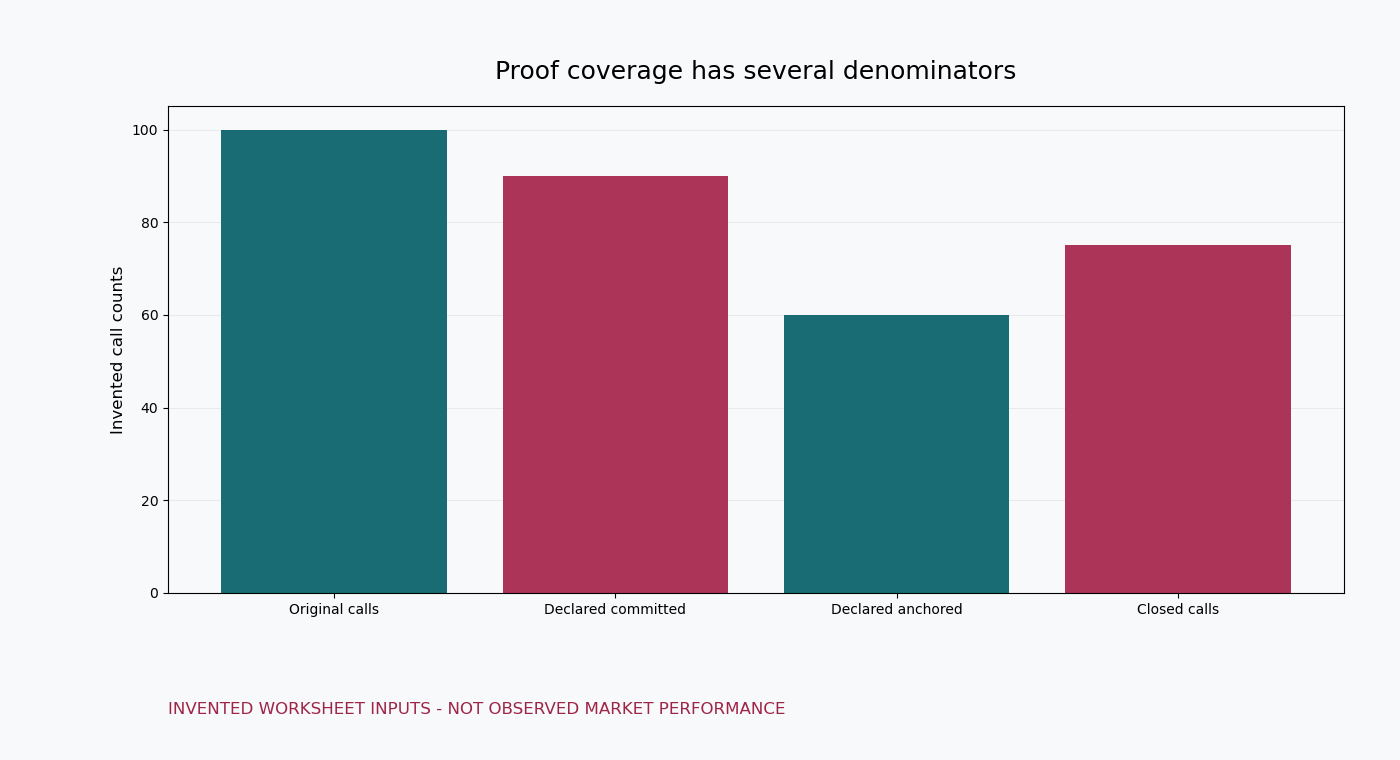
Committed and anchored counts are entered by you. Their percentages do not verify bytes, anchor chronology or publication accessibility. Anchored calls must be a subset of committed calls, which must be a subset of originals.
Blank working records
Headers only. No observed trades, receipts or study findings are supplied in these templates.
Source documents
- OpenTimestamps client: verify and upgrade
- NIST FIPS 180-4: secure hash standard
- W3C Web Cryptography API
Documentation establishes the stated mechanism, not tested trading performance. Checked 9 October 2026; a later version can differ.
Move from totals to exact original IDs
The original count worksheet retains its declared terminal-status calculation. Counts can agree even while identities do not: the packet's eight-row variant duplicates S002 and omits S007. The separate ID checker exposes those discrepancies and withholds ratios on unresolved identities. The existing count result remains a diagnostic under entered assumptions, not proof of whole-history coverage or a measured provider win rate.